

NEWYou can now listen to Fox News articles!
Park rangers in Canada have uncovered a centuries-old shipwreck in a region known for many maritime disasters.
The shipwreck, which dates back more than 200 years, is believed to be the Swift, a civilian vessel that sank on Sept. 27, 1812.
En route from Bermuda to Newfoundland, the Swift sank along with the British Royal Navy frigate HMS Barbadoes and the schooner Emeline.
WINTER STORMS REVEAL POSSIBLE 17TH-CENTURY SHIPWRECK TIED TO ARMED CARIBBEAN VOYAGES
The discovery of the ship fragments — and the research that followed — was two years in the making.
The discovery was announced by Parks Canada officials last month. The group was first alerted to the site in February 2024 after team members found a pulley wheel with a mark of the British Royal Navy.
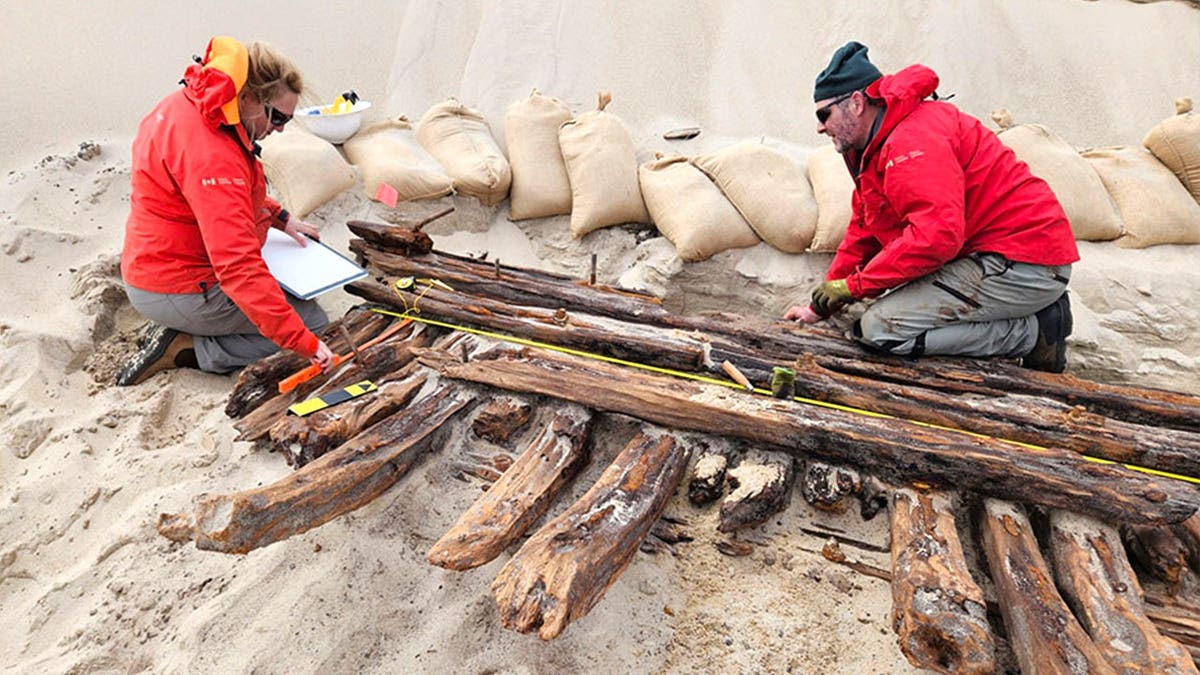
Parks Canada officials announced the discovery of a centuries-old shipwreck believed to be the Swift, which sank in 1812 near Sable Island. (Parks Canada)
“Another Parks Canada team member later found a piece of copper sheathing with multiple broad-arrow stamps and an Admiralty stamp dated January 1810 from Portsmouth, which supported the likelihood that we’d unearthed a small fragment of the Barbadoes — we know from historical accounts that the ship had a refit at Portsmouth in 1810,” the statement said.
“Sable Island is an unusual site to excavate, because it’s composed mostly of loose sand.”
Additional pulley wheels and copper sheathing were uncovered until officials eventually found a sloop-sized shipwreck section made of Bermudan cedar.
The artifacts appeared to belong to Barbadoes — while the shipwreck section pointed to the Swift.
2,000-YEAR-OLD ROMAN SHIPWRECK DISCOVERED WITH TREASURES STILL CLUSTERED WHERE IT SANK
“Initially, only three bits of wood were sticking out of the sand,” the statement said. “We believe the wreck to be that of the Swift.”
Sable Island has a reputation as the “graveyard of the Atlantic,” a Parks Canada spokesperson told Fox News Digital.
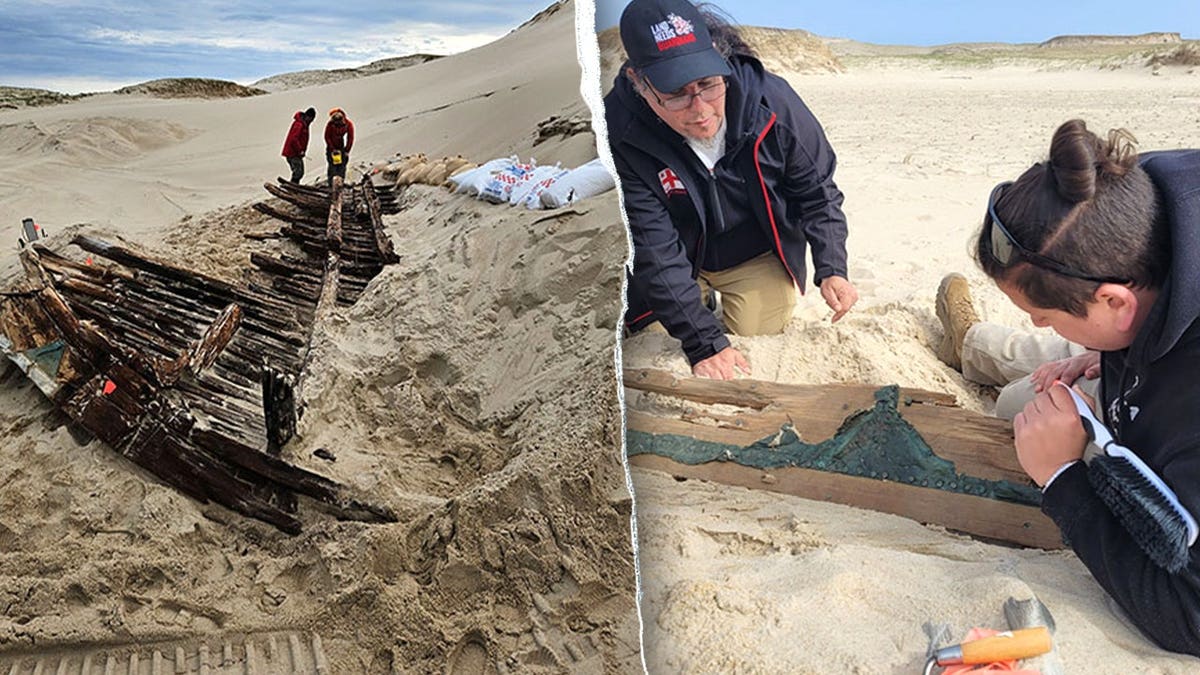
The wreck site was initially spotted when only small pieces of wood were visible above the sand, according to officials. (Parks Canada)
The official cited over 350 recorded shipwrecks since 1583.
Many shipwreck fragments, however, can’t be traced back to specific events unless they have “sufficient distinguishing features.”
TEST YOURSELF WITH OUR LATEST LIFESTYLE QUIZ
The official said, “Sometimes, it takes luck.”
The spokesperson added that the dig was difficult due to Sable Island’s windy, challenging weather and unusual terrain.
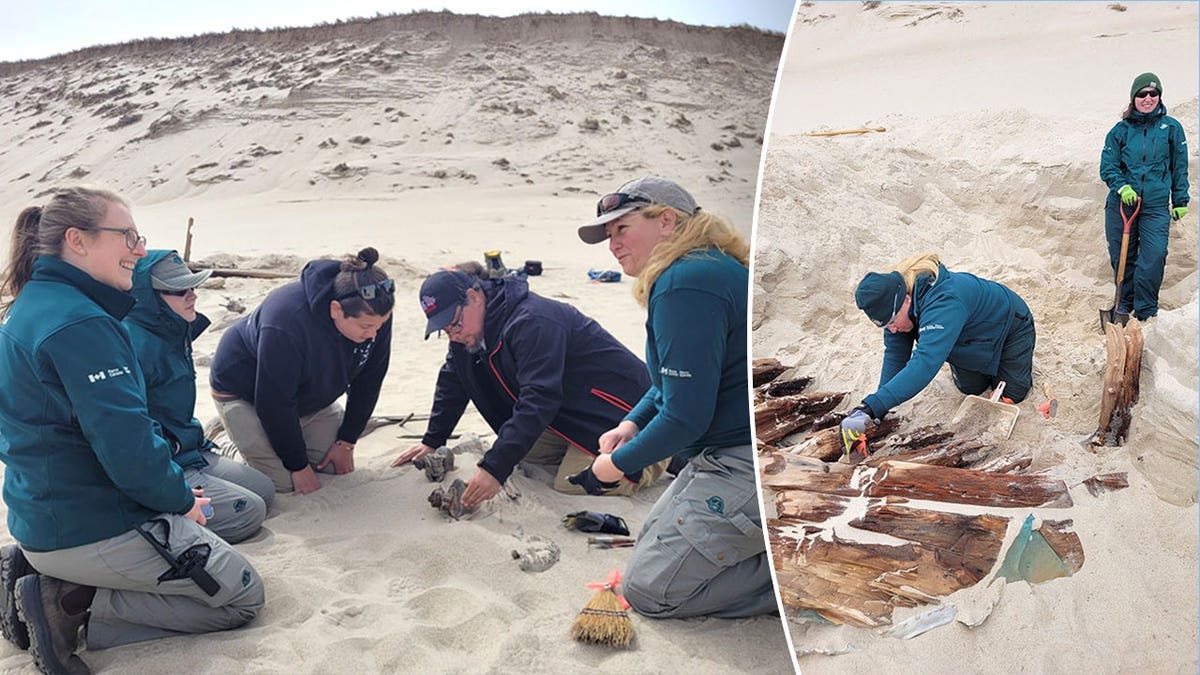
“This wreck discovery is especially exciting for us,” said a Parks Canada official. (Parks Canada)
Officials worked with Mi’kmaw archaeological technicians alongside both underwater and terrestrial archaeologists to excavate and document the wreck, adapting their methods to Sable Island’s shifting sands.
“Sable Island is an unusual site to excavate, because it’s composed mostly of loose sand,” said the spokesperson.
CLICK HERE TO SIGN UP FOR OUR LIFESTYLE NEWSLETTER
“We used sandbags to stabilize the banks and then peeled the sand back from the wreck site. We also used a skid steer to help remove the overburden of sand, then switched to hand tools to avoid damaging the wreck.”
When the documentation process was done, archaeologists covered the shipwreck with sand in order to protect it.
“The shipwreck we found was quite far inland from the current shoreline, so we’re also still piecing together how it got there.”
What stood out most to archaeologists, the official said, was the scale of the wreck.
“Most shipwreck pieces on Sable Island are usually small fragments lying on the surface or in the intertidal area,” the spokesperson noted. “This wreck was unusual both in its completeness and its condition.”
CLICK HERE FOR MORE LIFESTYLE STORIES
The official added, “This wreck discovery is especially exciting for us, because if we can verify it, it’s one of the rare occasions that anyone has been able to correlate a physical shipwreck on Sable Island with a documented historical wreck event from before the 20th century.”
Parks Canada’s statement noted that there are “still plenty of unknowns about the ships, how they ended up on Sable Island and what their crew’s time was like on the island while they waited to be rescued.”
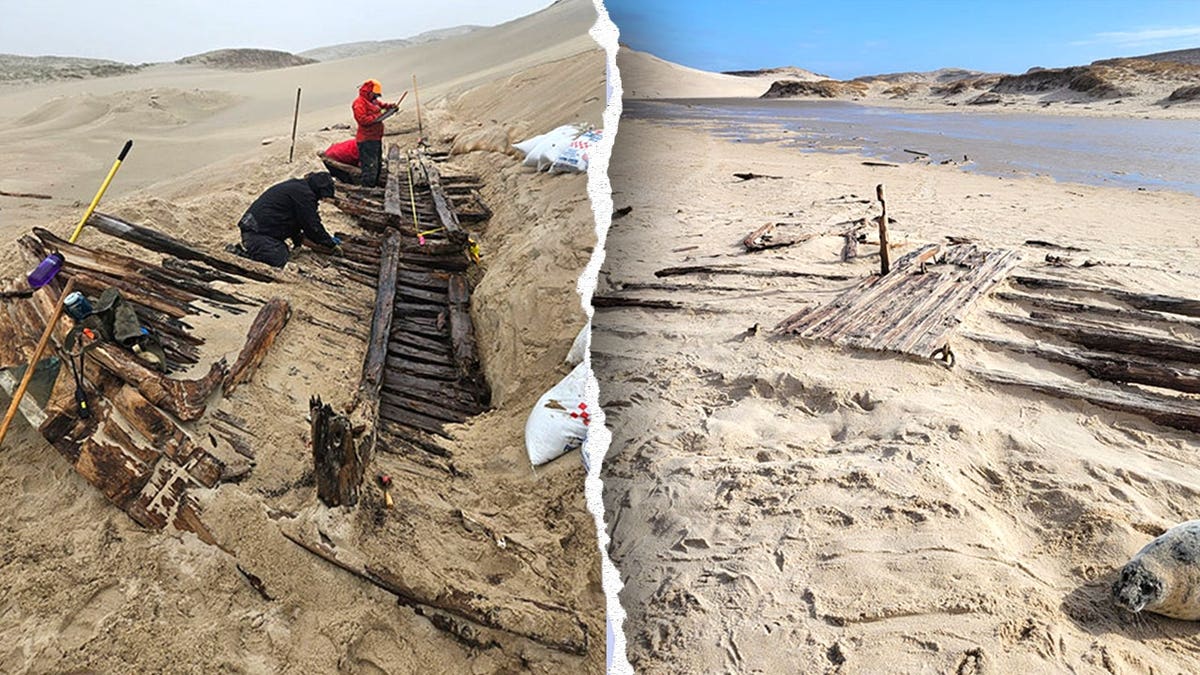
The site was found farther inland than expected, raising new questions about how the wreck moved over time. (Parks Canada)
“The shipwreck we found was quite far inland from the current shoreline, so we’re also still piecing together how it got there, as the island moves considerably over time,” the announcement said.
The news comes a year after another archaeological discovery was made at Sable Island — though far more modern.
CLICK HERE TO DOWNLOAD THE FOX NEWS APP
Last spring, officials announced that a message in a bottle from 1983 surfaced on Sable Island’s shores — and still smelled of gin.