

NEWYou can now listen to Fox News articles!
Billionaire Elon Musk recently told people not to worry about “squirreling” money away for retirement because advances in artificial intelligence would supposedly make savings irrelevant in the next 10 to 20 years.
Let me translate that into plain financial English: Don’t bother preparing for your future because robots and automation will take care of it.
That may sound exciting on a podcast. Even my own “Red, White, and Green” podcast. It may even sound comforting to those who don’t have a 401(k) plan.
But for everyday Americans trying to plan their financial lives, it’s reckless advice.
AMERICANS HAVE NEVER HAD ACCESS TO MORE LUXURIES, BUT WHY DO WE FEEL SO POOR?
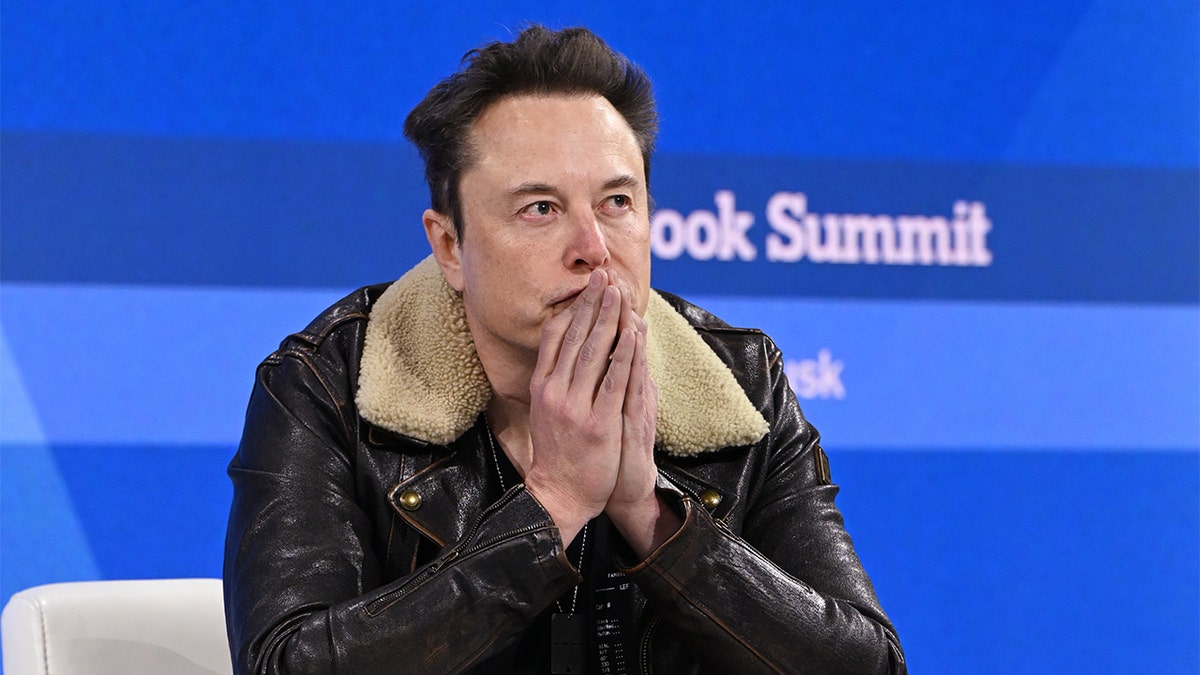
Elon Musk says not to worry about saving for retirement. He has billions of dollars and can take that risk. (Getty Images)
Here’s why.
First, Musk is a visionary entrepreneur. He’s also worth hundreds of billions of dollars. Somewhere between $600 billion to $750 billion depending on the day. Those two facts matter. When you already have generational wealth, it’s easy to talk about a future where money doesn’t matter. Most families don’t have that luxury when many are just scraping by the promise of Social Security in the future is an unknown.
Your retirement isn’t a science experiment. It’s groceries. It’s housing. It’s healthcare. It’s dignity.
REMOVE YOUR DATA TO PROTECT YOUR RETIREMENT FROM SCAMMERS
Those bills don’t wait for AI. Those bills can’t be picked up by Tesla.
Musk’s argument rests on a futuristic idea that artificial intelligence and robotics will create so much productivity that scarcity disappears. In this world, goods become cheap, income becomes universal and money loses importance.
That’s an interesting theory. However, since the dawn of time money and power have always mattered.
TRUMP’S 401(K) PLAN TRIES TO FIX HOUSING CRISIS. IT’S A FULL-BLOWN RETIREMENT DISASTER
And it’s certainly not a financial plan.
It assumes three massive things all happen perfectly: technology advances on schedule (that would be a first), wealth gets broadly distributed and government systems adapt smoothly. History tells us that technological revolutions don’t spread benefits evenly, and they usually concentrate wealth first and fix inequality later if they ever do at all. Just ask Musk.

A nurse checks a patient’s heart health during a routine exam. Healthcare is still a big expense for Americans. (iStock)
Ask factory workers displaced by automation. Ask retail employees replaced by self-checkout. Ask taxi drivers competing with ride-sharing apps.
‘SPAVING’ IS NOT SAVING. IT COULD COST YOU UP TO $50,000 OUT OF YOUR RETIREMENT
Technology doesn’t automatically equal financial security.
Meanwhile, back here in reality, Americans are facing rising healthcare costs, expensive housing, stubborn inflation and record household debt. Social Security already faces long-term funding challenges. Pensions are disappearing. Many workers don’t even have access to employer retirement plans.
That’s the environment people are retiring into right now. It’s not utopia.
HOW TO SECURE YOUR 401(K) PLAN FROM IDENTITY FRAUD
Musk’s argument rests on a futuristic idea that artificial intelligence and robotics will create so much productivity that scarcity disappears.
And here’s the most dangerous part of Musk’s message as a person giving financial advice for almost 35 years … it encourages people to delay action.
If someone in their 30s or 40s hears this and decides to stop contributing to their 401(k), skip their Roth IRA, or pay down their mortgage, that lost time compounds forever. You lose that snowball effect. Compound interest works best when you start early, not when you’re hoping Silicon Valley saves you.
Hope is not a strategy.
LAID OFF? HERE’S WHY LOSING YOUR JOB MIGHT BE THE BEST BREAK OF YOUR LIFE
Let’s do some simple math. A 40-year-old who stops saving for 10 years waiting for an AI miracle could easily miss out on hundreds of thousands of dollars in future retirement income. That’s not theoretical. That’s real money driven by real market returns.
Even if AI dramatically reshapes the economy and it likely will, money will always buy something incredibly valuable called optionality. The ability to have choices.
Savings give you flexibility. They give you independence. They give you negotiating power over how you live, where you live and when you stop working. They protect you from medical surprises, job disruptions, market downturns and policy changes.
HOW TO SAFEGUARD YOUR CREDIT SCORE IN RETIREMENT AS FRAUD AND IDENTITY THEFT RISE AMONG SENIORS
A future with advanced technology doesn’t eliminate risk. It changes the shape of it.
And let’s be honest about something else. Even in Musk’s dream world, someone still controls the machines. Someone still owns the platforms. Someone still collects the profits. Betting that those gains will automatically flow to everyone equally is optimistic at best.
And here’s the most dangerous part of Musk’s message as a person giving financial advice for almost 35 years … it encourages people to delay action.
So should people planning for retirement take Musk seriously?
TRUMP BROKE HIS PROMISE TO PROTECT A LIFELINE FOR 71 MILLION AMERICANS
As a dream experiment? Sure.
As day-to-day financial guidance? Not a chance.
Here’s my takeaway from all of this.
Keep funding your retirement accounts. Take the free employer match. Build your emergency reserve. Invest consistently on a monthly basis. Reduce high-interest debt. Diversify your assets and review your plan annually.
CLICK HERE FOR MORE FOX NEWS OPINION
If AI creates abundance someday, great. You’ll enter that future with real assets and not real anxiety.
But if it doesn’t arrive on schedule or doesn’t benefit everyone equally, you’ll be very glad you didn’t outsource your retirement to a prediction made by Elon.
CLICK HERE TO DOWNLOAD THE FOX NEWS APP
You can’t retire on optimism.
You can retire on preparation.
CLICK HERE TO READ MORE FROM TED JENKIN