
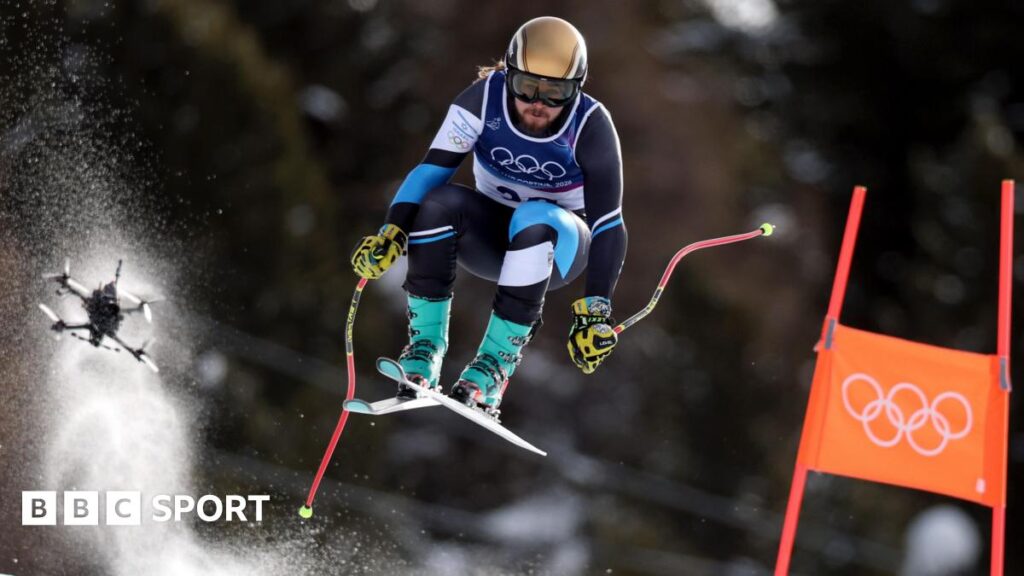
However, Games organisers say they have had no complaints from athletes or teams.
Pierre Ducrey, International Olympic Committee sports director, said: “When you prepare a broadcast, you take a lot of time to test things, including with high-level athletes, to make sure there is minimum level of disturbance. That is something we have worked at a lot.
“You saw the action at the weekend. We have to make sure it does not come in way of performance.
“It is an evolution. The integration seems to be something we can manage, so we are very happy.”
Games sports director Anna Riccardi said: “We tested drones before competitions.
“We have listened to the athletes’ community so that the impact would not affect their performances – would not bother them in any way.
“Each athlete has a different level of sensitivity, awareness and capability for tackling innovation.
“So far we have not received any complaints that might lead to the non-use of drones in the future.”
While drone pilots have been heaped with praise for their ability to control the tiny, flying cameras at such speeds, things have not been completely perfect.
One of the drones crash-landed in the first downhill training, leaving debris on the course.
The drones are controlled on site. For the sliding events, the pilot and their assistant sit in a tiny tent near the course and fly it from there.
They follow the athletes from the top of the track to the third corner, then fly back to the tent.